

Condos have become to become the major habitat associated with urban centers around North America. Touted as an enclosure alternative with some sort of care-free lifestyle, they will have become popular, especially during typically the last a decade or so. Single folks, childless couples and retirees seem to be able to be particularly captivated to them, mainly because of convenient amenities in and about them.
Yet, to many buyers and even unit owners, condo ownership may be ambiguous and convoluted. Since condos are generally not based on typically the same ownership framework as street-level classic (freehold) homes, evaluating condos to standard homes is a lot like evaluating apples with a melon. Condo ownership is based on a two-tiered ownership technique. One tier pertains to the person unit itself, along with the second, to the pro-rated and undivided attention of all the particular common elements throughout the condo organic, including the terrain beneath the complex. Actually though the unit owner receives an individual deed to their very own unit, it is definitely at all times contingent and subordinate towards the master deed with the second tier ownership, represented by simply the common elements of the property complex. Conversely, a traditional home, structured by simply its fee basic title ownership, provides its owner a complete and exclusive title of both the land and typically the dwelling erected upon it.
The major distinction here is that the particular person unit owner is not really the absolute grasp in the condo property. Sharing a common roof plus the sleep of the condominium complex with the particular other unit owners makes them a great intrinsic part associated with the joint title commune. Therefore , the value and destiny of any individual unit depends on all the device owners electing competent leaders (board members) to govern their own condo complex vigilantly, and on their own prompt payments associated with realty tax, regular maintenance fee and even special assessment, since they become thanks.
These are two pivotally important pre-requisites for any apartment complex to be run professionally, in addition to remain fiscally healthy and balanced to preserve the importance of its units in the future.
An important point to note is that typically the home owner's damage of property does not adversely affect any kind of their neighbours. Alternatively, the condo owner's loss of their own unit automatically impacts all their neighbours, typically the other fellow device owners within the same exact condo complex, by increasing their economical obligations to sustain the entire complex. Typically the more losses of the units, the particular heavier financial problem on remaining product owners to preserve the complex.
Apartment complexes are made up of of unit masters with varying economic strengths. Some acquire their units bushed cash, and some with a sizable lower payment. Many others can only afford to get their units along with very small lower payments, facilitated through insured high-ratio, the. k. a. Beast mortgages, mostly assured by tax payers. Economic policy creators, through quasi-government formed insurance agencies for example Fannie May, Freddy Mac and CMHC in Canada, possess been approving in addition to encouraging such (subsidized) purchases to activate the economy intended for quite some time.
During times of a healthy and balanced economy and radiant real estate market segments, the condo landscape - providing that is not overvalued - may become a viable alternate to traditional enclosure for which this was originally developed from its inception more than 40 years ago. Its unpredictability is necessary in periods of over-inflated rates, oversupply, unemployment and even interest spikes.
Usually, the financially weakest unit owners would be the first to falter during economic difficulty. Their units find liened and sold-out by forced product sales. If adverse issues persist, over moment, the strain on typically the remaining unit proprietors to shoulder the financial burden involving maintaining the entire complex may begin some sort of domino effect. More unit owners may well then succumb in order to financial pressures, especially when you will find not any readily available new unit buyers out there.
To realize just what may happen to apartments within the extreme, one particular has to check out what happened to cooperatives or "Co-ops, very well a very related concept to condominium-like ownership. The fantastic Depressive disorder of the 1930s caused scores of co-op owners, incapable to handle their particular financial woes, to be able to default prove maintenance fees and common co-op mortgages. That precipitated the catastrophic failure of co-ops on a substantial scale. Should the particular economy tank again, condos, some of them borrowed to the hilt, may end right up meeting their decline in the same way co-ops would some eighty decades ago.
To avoid like scary scenarios, the public should always be aware that acquiring into a condo complex is not a worry no cost ownership arrangement, while many are brought to believe. In https://www.thelakegarden-residences.com.sg , it is filled with peril. The particular popular assumption that by buying a high-rise apartment unit, one gets free of their complex ownership worries is dead wrong. The public has to have a cautionary tale concerning condo ownership.
Govt regulators and coverage makers should consider remember that condominiums are usually the most volatile of real-estate products due to the particular financial diversity associated with its inhabitants. Monetarily weak unit proprietors with minimum collateral in their models must realize of which defaulting on a condo's timeshare and even mortgages will make all of them lose their models, resulting in economic liabilities that could haunt them with regard to years. Politicians in addition to regulators in charge should realize that in the next major marketplace correction, the trade-off of stimulating the economy by inducing fiscally weak buyers to acquire condos with minimum down payments may backfire badly, causing in taxpayers footing the bill for defaulted insured mortgages. Worse yet, vacancies because of fall-outs simply by no-equity unit owners, might lead to disastrous effects to the remaining device owners and their own complexes.
To prevent this kind of possibilities and ensure that condos continue to be a viable and even sustainable form of housing, certain shields, one of which was formerly used by banking institutions, should always be reinstated for that advantage of the property industry's future.
A Mandatory Minimum Down Transaction of at least 35%
Before government insurers stepped inside to insure high-ratio mortgages on apartment units, financial institutions were insisting about a minimum 35% down payment. Realizing that condos were exceedingly risky, they would certainly not provide mortgage loans for more than 65% of their unit value. Their risk had been later minimized instructions in fact, almost eliminated - when government insured firms started to give them with guarantees in case of eventual defaults.
By simply doing so, the vehicle was created simply by which a standard renter with really low cash upon hand could buy a condo unit with no putting down a great deal of their own money (equity). This government-subsidized policy had caused scores of classic renters, many associated with them turned-speculators, to buy as a lot of condos as probable for the reason of keeping the casing sector a strong contributor to the nation's economy.
The flaw of such a socialist-like system had been tested throughout the true estate crash with the early 90s, exactly where, due to oversupply, the pool of legitimately available customers dehydrated, leading to be able to a dramatic bringing down of condominium device values and massive foreclosures by no-equity unit owners. Worst strike were taxpayers, who paid banks great of dollars for defaulted mortgages by way of government insurance agencies.
Another test involving the system's imperfection occurred in the in 2008, in which again, the rates of housing, plus particularly condominiums, experienced devaluation of upward to 50% in many major urban regions. Again, it was taxpayers that got to foot the bill for the defaulted mortgages.
It seems as if little was learned from like failures. A newly released MarketWatch piece titled "Opinion: It will rapidly get easier to be able to buy a home-but avoid do it" of October 24, 2014, quotes the FHFA director saying that Fannie Mae and even Freddie Mac will be planning to guarantee some loans with collateral as little as 3%.
Given that most economists consent we presently stay in an economic real estate with overinflated genuine estate prices, many of us must ask yourself if we can afford to sit down and wait for a following market crash that will would lead in order to another major property devaluation. The after that such crash may not only impact taxpayers but also the score of owners that might shed their condo devices. Condo complexes still left with many bare units could extremely possibly end up wound down through insolvency proceedings, eventually transforming themselves straight into ordinary apartment buildings. Problems for the economic system - in fact , to be able to the whole society - could always be very dire.
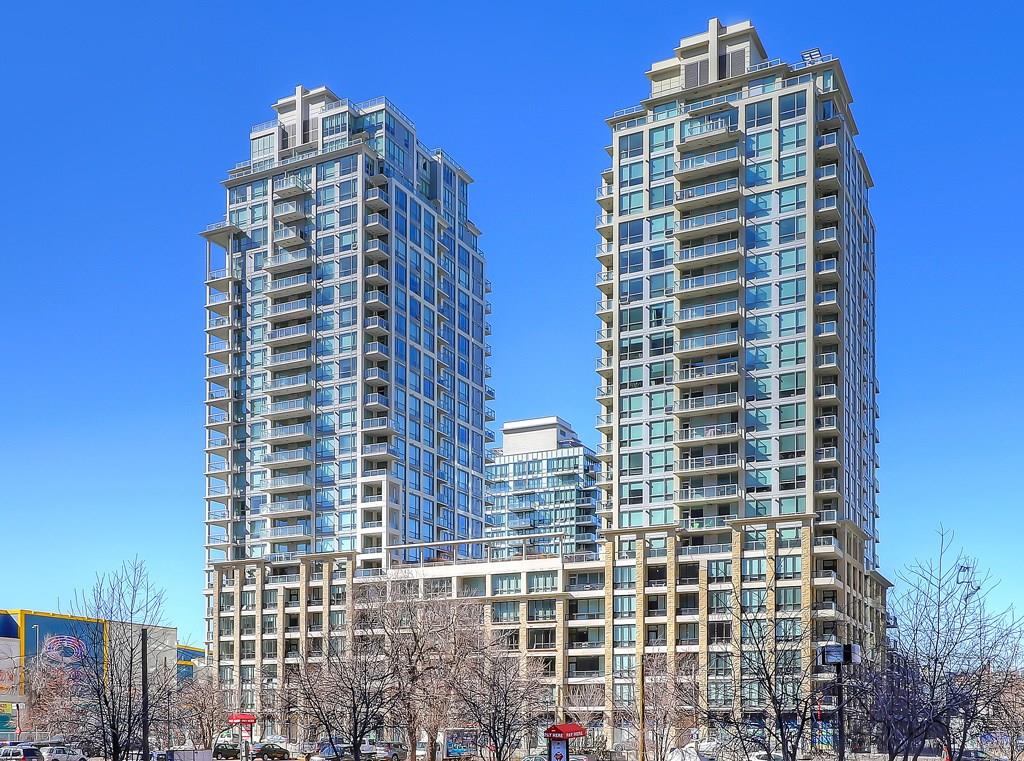
With regard to the sake associated with preserving the condominium industry and to minimize the chance of taxpayers' legal responsibility in case regarding potential massive defaults, condos should get excluded from high-ratio insured mortgages. Condo buyers should once again be required in order to put at very least a 35% decrease payment of their own own money in case they wish to buy a condo. With no longer determining for government confirmed insurance issues mortgage loans, and condos outstanding to be too expensive, banks might firmly insist for even higher down payments. Although sounding scary, this kind of would actually business lead us back to the particular free-market policy, on which our culture was founded. Apartment complexes that are usually well governed, made up of unit users able to pay for its distinct life-style, can be in much better financial shape as its personal owners would deposit their own (substantial) equity into the units, leaving all of them in greater posture to cope with future increased preservation costs. Their specific and collective economical strength would guarantee the preservation, even enhancement, of their units and processes in times in the future.
Disqualifying condos intended for insured high proportion mortgages would certainly not weaken the real estate industry. In fact , it would attract developers to create more affordable house buildings to house the public that are not able to afford to acquire specific estate, and alleviate tax payers of paying for high-ratio insured mortgages about defaulted condo models.